> ./load-projects-Simulating the Diels-Alder Reaction to show Regioselectivity-2024-10-24T00:00:00+00:00.sh
> loading progress bar...
[ ██████████████████████████████████████████████████ ] 100%> retrieving projects@October 24, 2024...
In this project I simulated the Diels-Alder reaction using GAUSSIAN software. During this project I learned to:
- Use SSH to access remote super computer clusters
- Simulate physical and chemical systems using modeling software
- Analyze data recieved from those simulations
- Use that data to adjust your simulations and improve results
- Present findings to fellow researchers in person and in writing
Background and Motivation
During the summer of 2010 I took part in the Marshall University High Performance Computing Research Experience for Undergraduates. Over the two months, we learned as much as possible about the High Performance Computing field. We learned to program in C++, how to navigate a Linux terminal and SSH into a remote, how to benchmark programs to find bottlenecks and improve performance, and how to analyze and interpret the data output from our programs using tools like Maxima and Matplotlib. At the end of the project, we did a capstone project with an actual researcher using Queen Bee, the most powerful (at the time) super computer in the world. For my capstone, I simulated the Diels-Alder Reaction from organic chemistry using the GAUSSIAN software package to show that the regioselectivity of the reaction emerges from ab-initio quantum mechanical calculations.
Simulating the Diels-Alder Reaction to show Regioselectivity
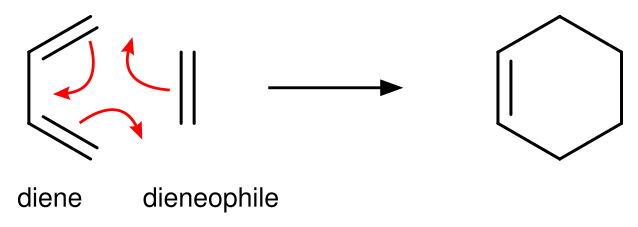
The Diels-Alder Reaction
The Diels-Alder reaction is famous for its regioselectivity: even when the reaction allows multiple outcomes, it always favors one over the other. To explore this, I simulated the Diels-Alder reaction using GAUSSIAN software. By varying the functional groups on the diene, and comparing the results of the reactions when run using GAUSSIAN, I was able to show that the regioselectivity did emerge from quantum mechanical first-principles. The highest level ab-initio calculations still showed the regioselectivity of the reaction.
Using GAUSSIAN on a Linux-based Supercomputing Cluster
GAUSSIAN is a widely used software package for computational chemistry that allows researchers to perform quantum chemical calculations. In this project, I utilized GAUSSIAN to simulate the Diels-Alder reaction. The simulations were run on Queen Bee, a Linux-based supercomputing cluster that provides the computational resources necessary for complex simulations. The use of a supercomputing cluster allowed me to perform the simulations efficiently and analyze the results in a reasonable timeframe. During the process, I learned how to write input files for GAUSSIAN, submit those jobs to the cluster using SSH, and manage the output files to extract meaningful data.
Analyzing the Results and Visualizing the Regioselectivity
I used a python script to automate the analysis of the results, which included calculating the energies of the different products and determining the regioselectivity of the reaction. MatPlotLib was used to visualize the results, showing the energy differences between the possible products and confirming the regioselectivity of the Diels-Alder reaction from ab-initio simulations.
Conclusions
Through this project, I was able to successfully simulate the Diels-Alder reaction and demonstrate its regioselectivity using computational methods. The use of GAUSSIAN on a supercomputing cluster allowed me to perform complex simulations efficiently, and the analysis of the results provided insights into the energy differences between the possible products of the reaction. The project not only confirmed the expected regioselectivity of the Diels-Alder reaction but also enhanced my skills in computational chemistry, programming, and data analysis.
Overall, this project provided valuable experience in computational chemistry, using GAUSSIAN software, and working with supercomputing resources and remote Linux servers. The results of the simulations confirmed the expected regioselectivity of the Diels-Alder reaction, demonstrating the power of computational methods in understanding chemical reactions. This project also enhanced my skills in setting up and analyzing complex simulations, and many programming skills in Python for data analysis and visualization.
.> /load-comments-Simulating the Diels-Alder Reaction to show Regioselectivity-linux-x64.sh